Integrated business operationsR&D, manufacturing, installation
- HOME
- Our vision
- Integrated business operations
- R&D, manufacturing, installation
We continue to create safe, secure and comfortable building spaces to deliver on our customers’ trust.
Research & development
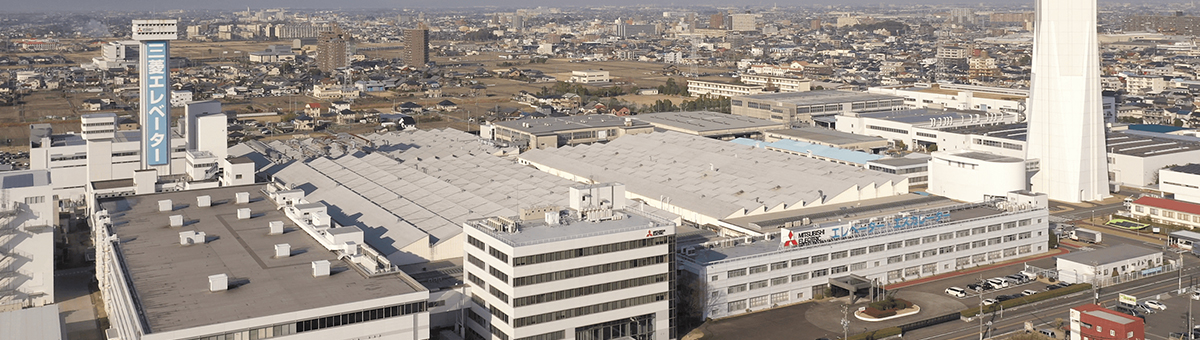
Our world-leading mother factory: Inazawa Building Systems Works
Established in 1964 as a specialized factory for elevators and escalators, Inazawa Building Systems Works in Japan’s Aichi Prefecture is currently responsible for the development and manufacturing of building management systems. As a mother factory distinguished for its advanced production systems and skilled craftsmanship, the facility has consistently provided superlative quality products, now to approximately 100 countries around the world. Towering within the factory grounds is SOLAÉ, one of the world’s tallest elevator test towers. In order to create the next generation of ultra high-rise, ultra high-speed elevators, we conduct a variety of verification tests for essentials such as drive control, safety, key component development, and ride comfort.
Inazawa Building Systems Works is also working to reduce energy and resource consumption by making products smaller and lighter, modernizing products, and repairing and reusing maintenance parts. Our world-leading factory is contributing to the realization of a sustainable global environment.
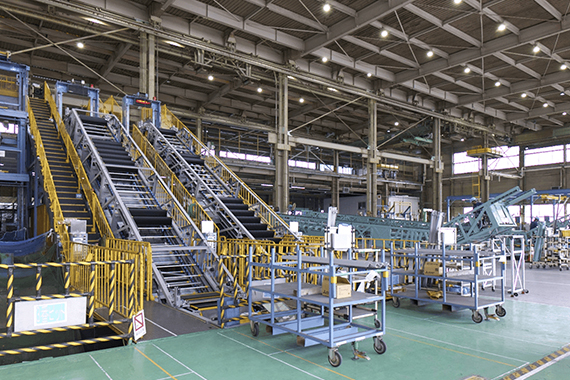
Escalator manufacturing and assembly site
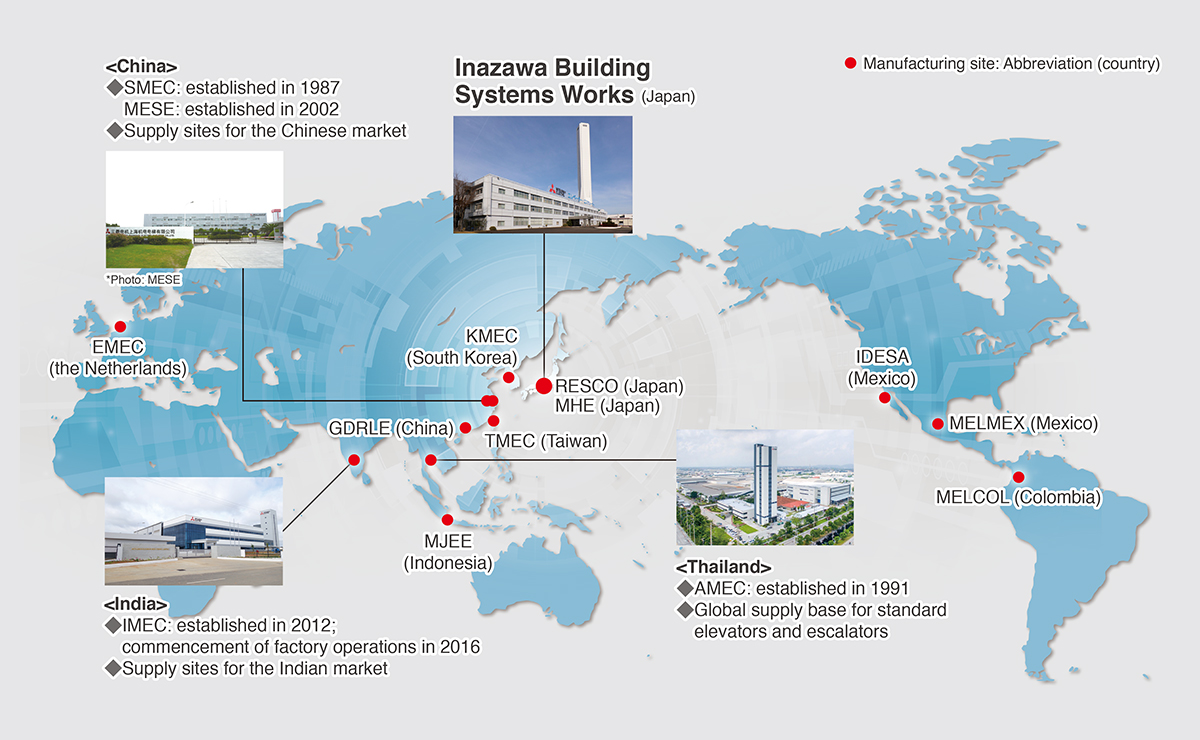
Global production framework(as of July 2024)
Staying on top of changing needs for R&D into safe, secure and comfortable products
We have shipped approximately 10,000 elevators and escalators annually, totaling more than 500,000 units around the world. Our R&D is always based on the user’s perspective. For example, as buildings become taller and the demand for faster elevators increases, we conduct simulations including strength, vibration and noise analyses, based on 3D data from the development stage.
At our global manufacturing sites, we develop, manufacture, and deliver products that meet the specific needs of local customers. We consider it our important duty to listen to our customers and make improvements to provide safer, more secure, and more comfortable products.
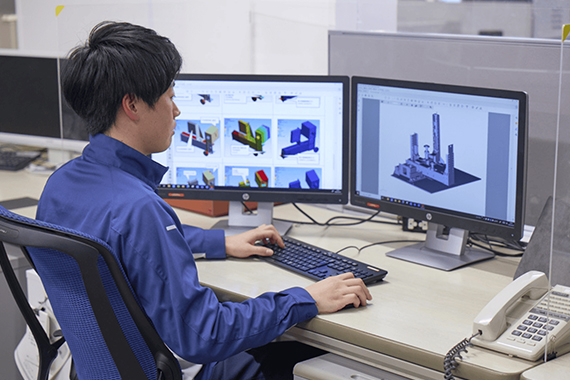
Simulation based on 3D data at the development stage
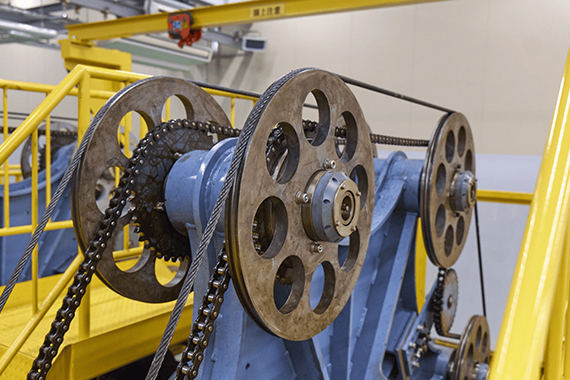
Wire rope accelerated life testing
Strict performance assessment through numerous development and verification tests
Greater product functionality requires greater reliability. To ensure peace of mind when using our elevators, escalators, and building management systems, we verify safety down to the smallest detail while considering a variety of usage conditions and environments. From strength and durability checks to confirming operation in the event of an emergency, we conduct repeated verification tests, anticipating every possible situation to continue developing ever-better products.
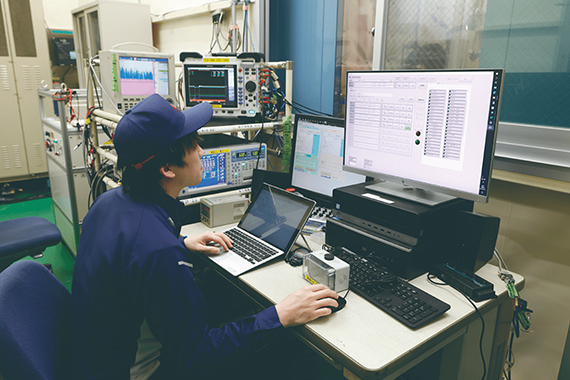
Traction machine load test
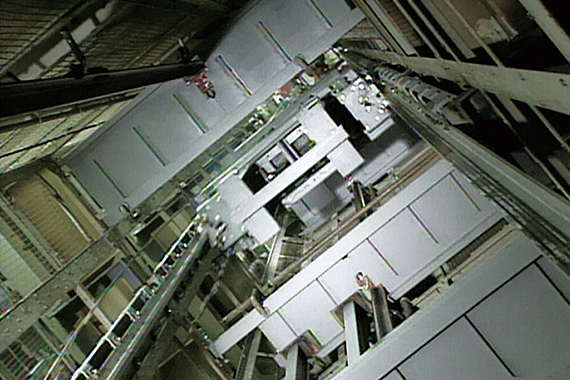
Safety gear drop test
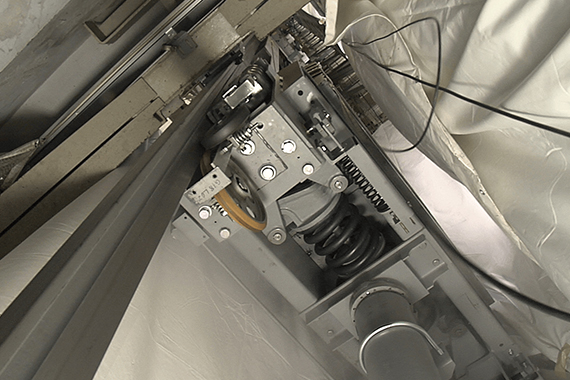
Buffer drop test
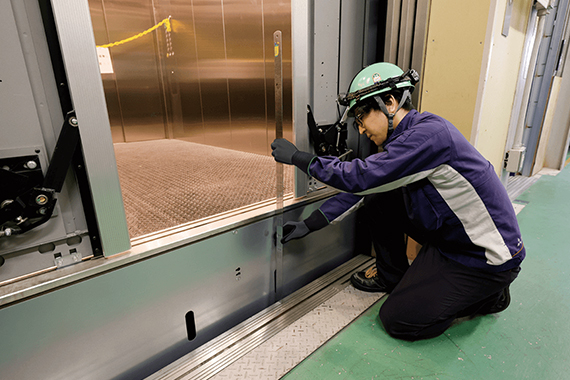
Unintended Car Movement Protection (UCMP) test
Manufacturing
Quality bolstered by a stable and reliable production line
Inazawa Building Systems Works manufactures key components for elevators, escalators and building management systems. For each order, we work to fulfill a range of customer requests, including for functionality, design, and installation requirements. We have also implemented strict pre-delivery inspection standards to ensure thorough quality control.
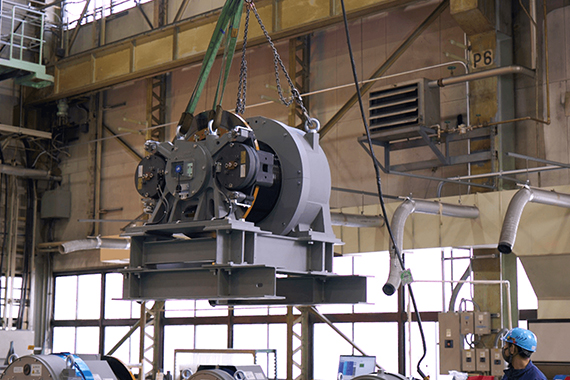
Elevator traction machine manufacturing
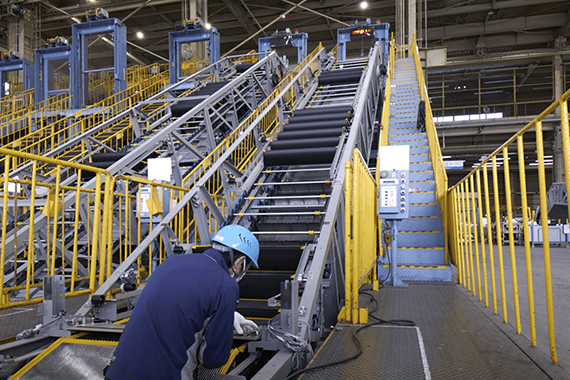
Escalator manufacturing
Installation
Installation expertise that affects the ride comfort of elevators and escalators
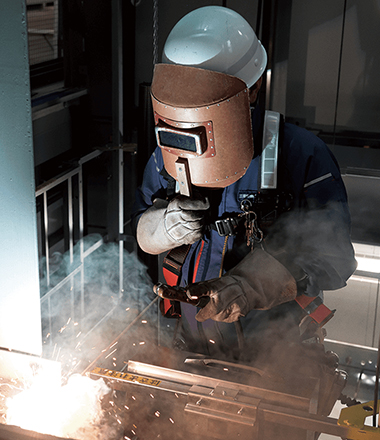
The comfortable ride of our elevators and escalators is facilitated by installation experts who possess the spirit of craftsmanship, with solid skills to accurately position—down to the millimeter—rails that stretch for hundreds of meters. We have implemented a training program to develop outstanding installation experts and are committed to their education. Such efforts help ensure safe and reliable construction on site. We are also promoting the development of new construction techniques, jigs (tools for installation) that enable more efficient and safe construction, as well as the development of next-generation engineering methods that minimize impact on the surrounding environment.
From the development of building equipment to maintenance and modernization, our integrated business operations enable us to constantly innovate in technology and service quality and respond quickly to customer needs.
- R&D, manufacturing, installation